Introduction
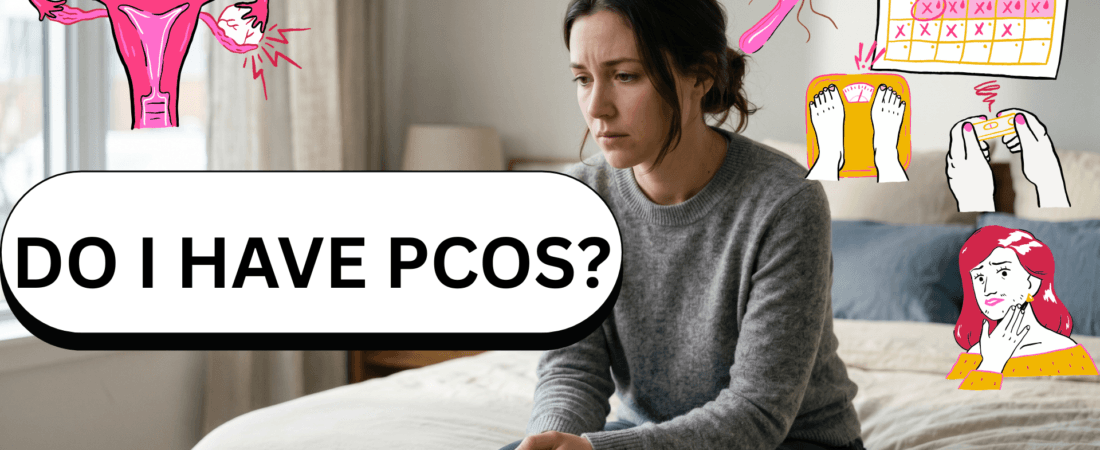
Something feels off. You can feel it. And somewhere in the back of your mind you keep asking yourself do I have PCOS?
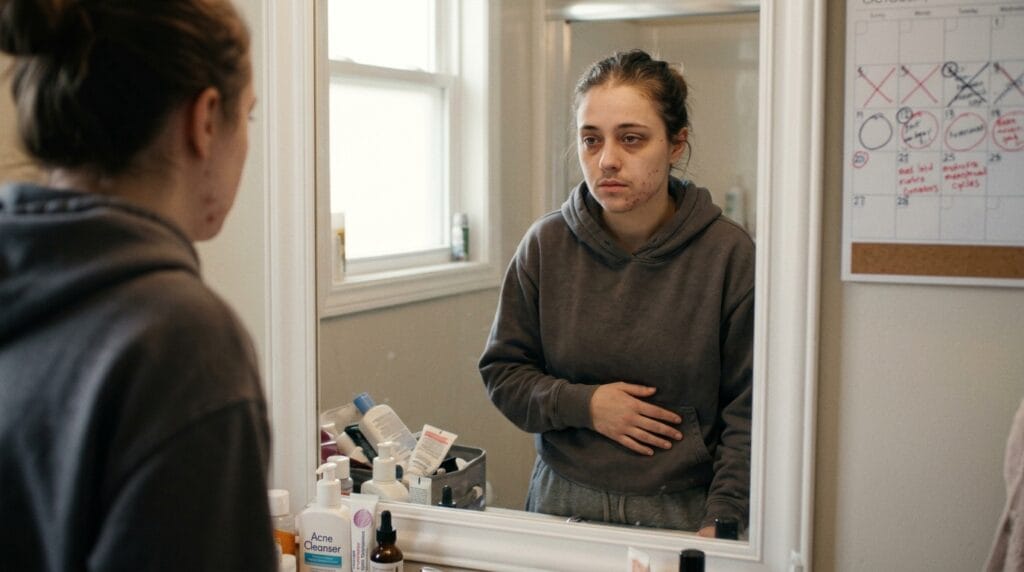
Your period shows up whenever it wants or sometimes not at all. The weight keeps climbing no matter how carefully you eat. Your hair is falling out in the shower every single morning. Your skin is breaking out like a teenager despite trying every product on the market. And your energy disappears before lunch no matter how early you go to bed.
You have Googled everything. And every single time the same question keeps pulling you back.

Do I have PCOS?
So let us stop guessing. This guide walks you through every real symptom, helps you understand what is actually happening inside your body and tells you exactly what to do next.
And there is something else. Doctors are now pushing to rename PCOS entirely. The reason why exposes everything that has been wrong with how this condition gets diagnosed and dismissed for decades.
What Is PCOS And Why Is It So Hard To Diagnose?
Before asking do I have PCOS it helps to understand what PCOS actually is and what it is not.
PCOS stands for Polycystic Ovary Syndrome. It affects 1 in 10 women worldwide and despite being one of the most common hormonal conditions in women it is also one of the most misunderstood and underdiagnosed.
Here is what most doctors skip over entirely.
PCOS is not primarily a condition of the ovaries. At its root it is a metabolic and hormonal disorder. Insulin resistance drives almost everything. When your body stops responding properly to insulin your blood sugar becomes unstable and that instability signals your ovaries to produce excess androgens like testosterone.
Those excess androgens are what cause most of what you actually feel and see every day. The hormonal acne. The facial hair. The hair thinning. The stubborn belly fat. The exhaustion that sleep does not fix. The irregular cycles that leave you guessing every single month.
All of it. One root cause. And most women are never told this.
Do I Have PCOS?: The Complete Symptoms Checklist
Read through these carefully. Take note of every symptom that applies including the ones you have been putting up with for years and telling yourself are just normal.
Do I Have PCOS?: Cycle Symptoms
Irregular periods are one of the earliest and most telling signs when asking do I have PCOS. This means cycles shorter than 21 days or longer than 35. Some women with PCOS go months without a period at all. Others experience very heavy bleeding or barely any flow.
Beyond that severe PMS, intense mood swings, cramping, bloating and breast tenderness alongside spotting between periods are common hormonal red flags that should never be dismissed as just part of being a woman.
Weight and Energy Symptoms
This is where PCOS hits hardest for most women and it is the symptom most misunderstood by doctors.
Unexplained weight gain especially around the belly that does not shift no matter what you eat or how much you exercise. Relentless sugar and carb cravings driven by blood sugar instability. Energy crashes after meals. Feeling hungry again an hour after eating. Bloating that feels hormonal rather than digestive.
These are not willpower failures. They are insulin resistance symptoms. And they will not budge until the root cause is actually addressed.
Skin and Hair Symptoms
Persistent hormonal acne along the jaw, chin and back is one of the most recognisable signs when wondering do I have PCOS. Alongside that hair thinning or excessive shedding on the scalp, unwanted hair growing on the face, chin, chest or stomach, dark patches of skin on the neck or underarms, skin tags and chronically oily skin all point in the same direction.
Every single one of these connects directly to androgens and insulin dysregulation working against your body from the inside out.
Do I Have PCOS?: Mental Health Symptoms
Chronic fatigue that no amount of sleep fixes. Anxiety that has no obvious cause. Brain fog so thick you cannot think clearly. Mood swings that feel directly tied to your cycle. Lying awake feeling wired and exhausted at the same time.
These are not personality traits. They are not you being too sensitive or dramatic. They are hormonal symptoms and they deserve to be taken as seriously as any physical sign.
Do I Have PCOS?: Fertility Symptoms
Difficulty conceiving despite trying consistently. Repeated unexplained miscarriages. Cysts found on an ultrasound. A previous diagnosis of insulin resistance. A mother or sister with PCOS. Any combination of these alongside the symptoms above strongly points toward PCOS as the underlying cause.

Do I Have PCOS?: What Your Symptom Count Means
5 or fewer symptoms: Your symptoms may point toward thyroid dysfunction, estrogen dominance or adrenal fatigue instead. Still worth getting a full hormone panel to rule things out and get real answers.
6 to 12 symptoms : You show a clear pattern consistent with PCOS. Ask your doctor specifically for a full hormone blood panel not just a basic thyroid check or standard blood test.
13 or more symptoms: Your profile strongly aligns with PCOS. Push for comprehensive bloodwork covering free testosterone, LH, FSH, prolactin, fasting insulin, fasting glucose, DHEA-S and full thyroid markers including antibodies. Do not leave that appointment without a concrete plan.
Why So Many Women Asking Do I Have PCOS Go Undiagnosed For Years
Here is something that genuinely shocks most women when they first hear it.
You can have PCOS without a single cyst on your ovaries.
The Rotterdam Criteria: the globally accepted diagnostic standard only requires two out of three factors. Irregular ovulation. Elevated androgens. Polycystic ovaries on a scan. Cysts are just one option not a requirement.
This means a woman can walk out of an ultrasound with a completely clear scan and still fully meet the diagnostic criteria for PCOS based on her bloodwork and symptoms alone.
But most doctors do not explain this. Instead women hear “your scan looks fine” and go home without answers continuing to gain weight, lose hair, struggle mentally and feel completely broken while being told nothing is wrong.
That gap has left millions of women asking do I have PCOS for years with no real answer. Dismissed. Gaslit. Told to eat less and exercise more while their hormonal system was the problem all along.
Why PCOS Is Being Renamed And Why It Matters
This is the biggest shift in women’s hormonal health in years and most women have not heard about it yet.
Researchers and medical organizations are formally proposing to rename PCOS to Metabolic Reproductive Syndrome also being discussed as PMOS, Polyendocrine Metabolic Ovarian Syndrome.
The current name focuses entirely on the ovaries. But the real driver of this condition is metabolic dysfunction specifically insulin resistance. That misdirection has been misleading doctors and patients for decades. Women without cysts get dismissed. Treatment defaults to the contraceptive pill. The metabolic picture gets ignored completely.
The new name changes everything. It tells doctors to look at insulin and metabolism first. Women without cysts will stop being turned away. And it opens the door to treatment that actually addresses the root cause not just masking symptoms temporarily.

If you have ever been told everything looks normal while your body was screaming otherwise this rename is your validation. The system failed you. Not the other way around.
Still Asking Do I Have PCOS? Here Is What To Do Next
Do not sit with this information and do nothing. Take these steps now.
Get the right bloodwork.
Ask specifically for free testosterone, LH, FSH, prolactin, DHEA-S, fasting insulin, fasting glucose, HbA1c and a full thyroid panel including antibodies. A standard blood test will not show you the full picture.
Track your cycle for three months.
Note cycle length, flow intensity, pain levels, energy crashes and mood shifts. This data becomes powerful evidence when advocating for yourself in a medical appointment.
Address your nutrition.
Reduce refined carbohydrates and pair every meal with protein and healthy fat. This directly improves insulin sensitivity the root cause of most PCOS symptoms. It is not about eating less. It is about giving your body the right hormonal signals.
Support your nervous system
Chronic stress raises cortisol which raises blood sugar which raises insulin and makes every PCOS symptom worse. Nervous system support is not optional with this condition it is core to managing it.
Keep learning. The more you understand your hormones the better equipped you are to advocate for yourself. Explore the full hormone and PCOS guides at womensinnerbattles.com
Final Thought
If you have been asking do I have PCOS and something in this resonated trust that feeling.
Your body is not working against you. It is asking for support. It is communicating through every symptom you have been dismissing, ignoring or being told is not real.
Now that you know what to look for you can finally start giving it what it needs.
Share this with a woman who keeps being told she is fine when she knows deep down that something is wrong.
She deserves answers. And so do you. 🤍
Note:This content is for informational purposes only and does not replace professional medical advice. Always consult a qualified healthcare provider before making changes to your health routine.